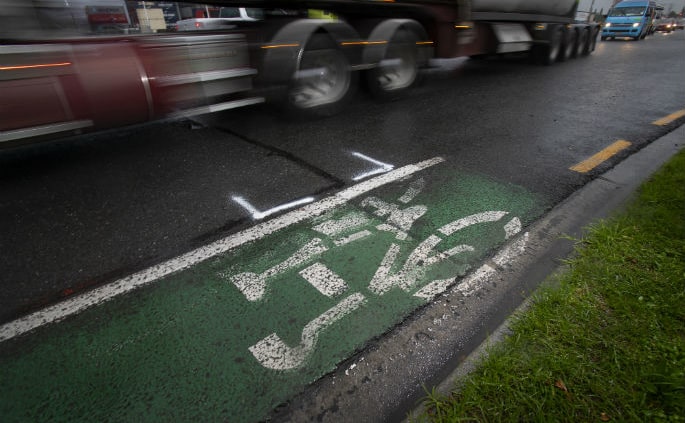
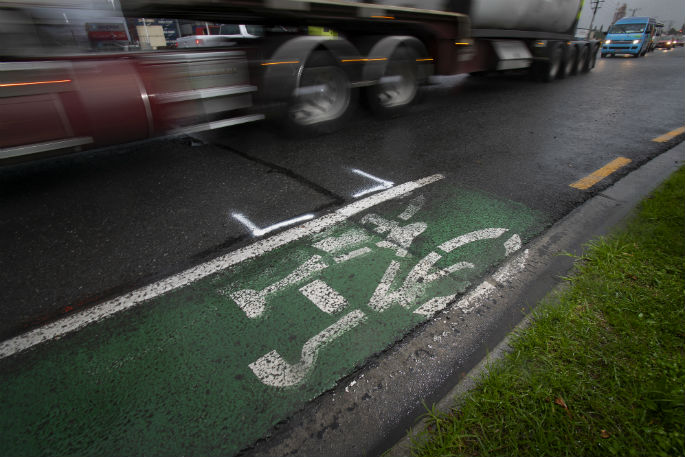
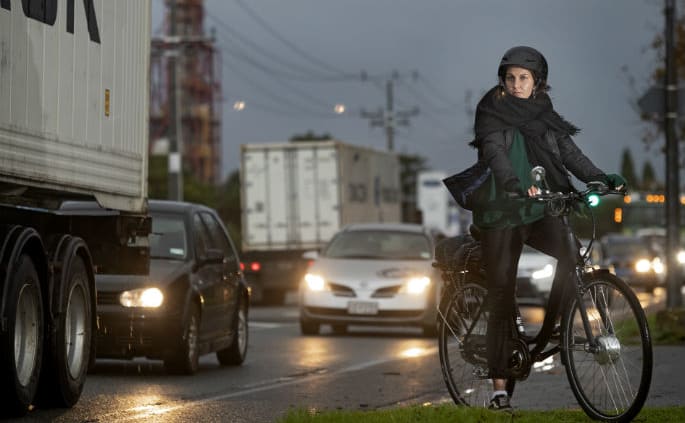
Elected officials in Tauranga have unanimously backed a proposal to build a nearly $7 million separated cycling route on Totara St, where a cyclist died last month in a crash.
But a dispute between elected officials over where to find the money for the project led to accusations of “blatant filibustering” in yesterday’s Tauranga City Council meeting.
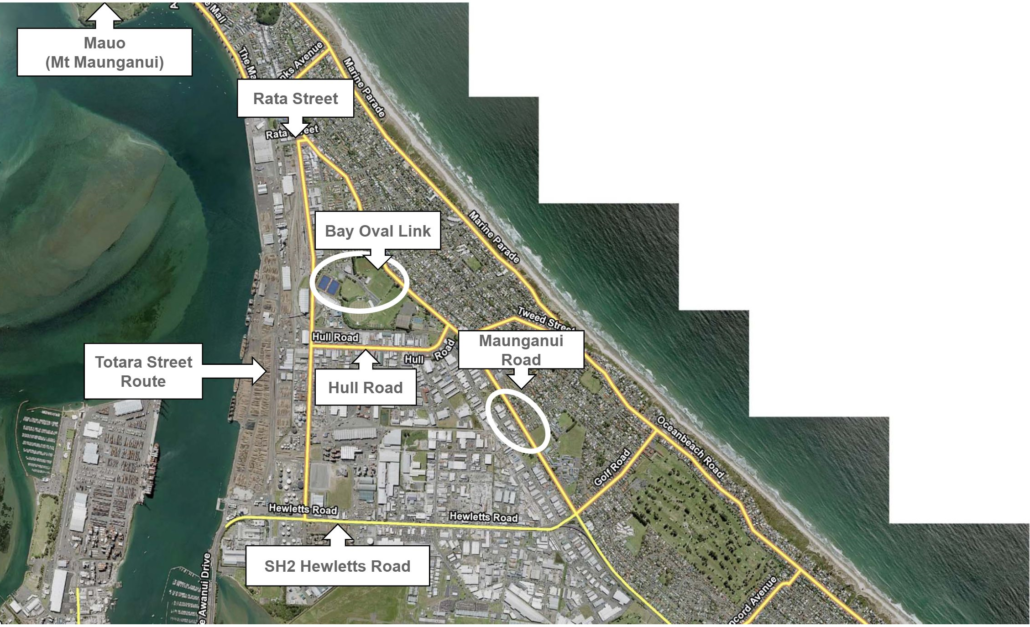
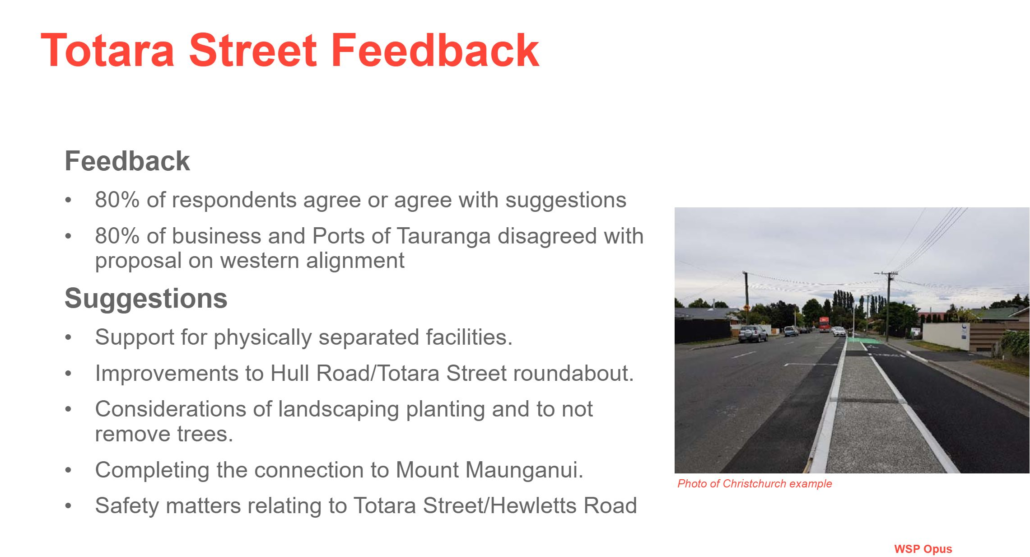
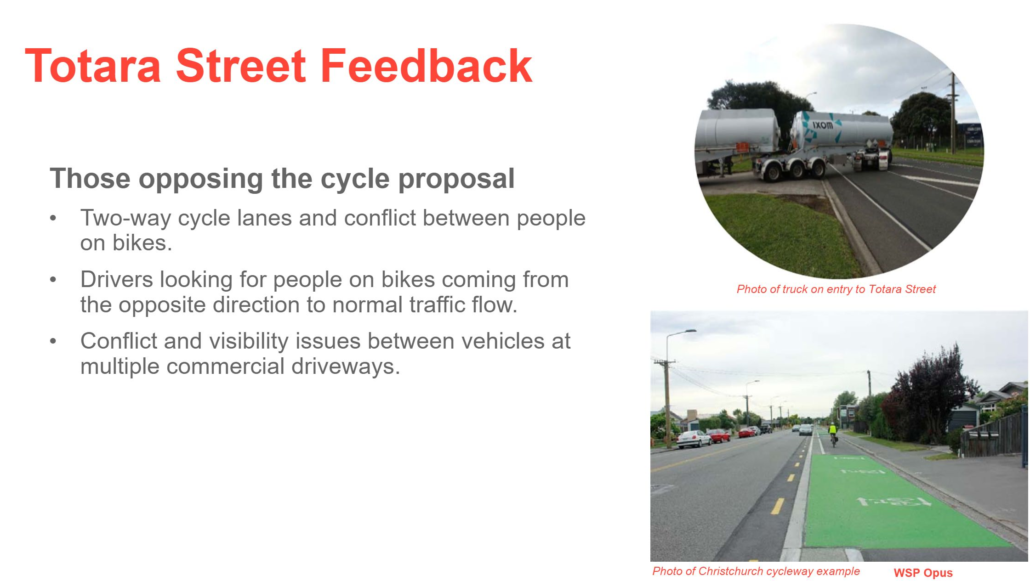
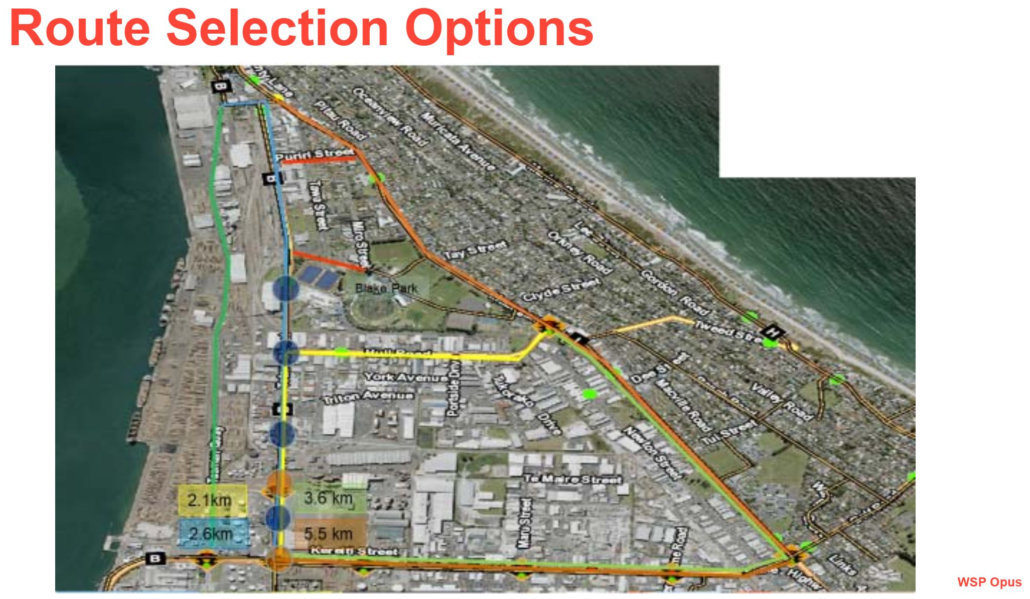
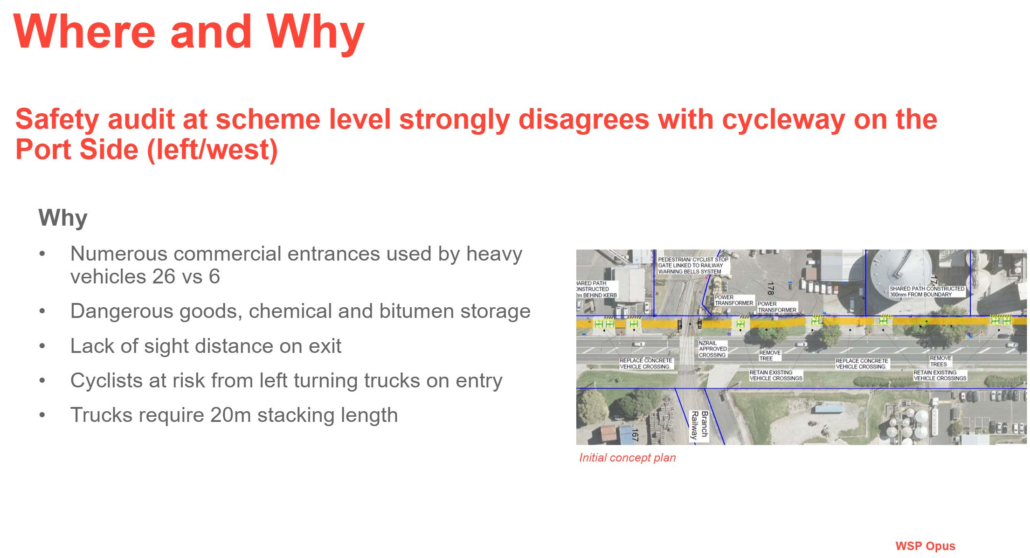
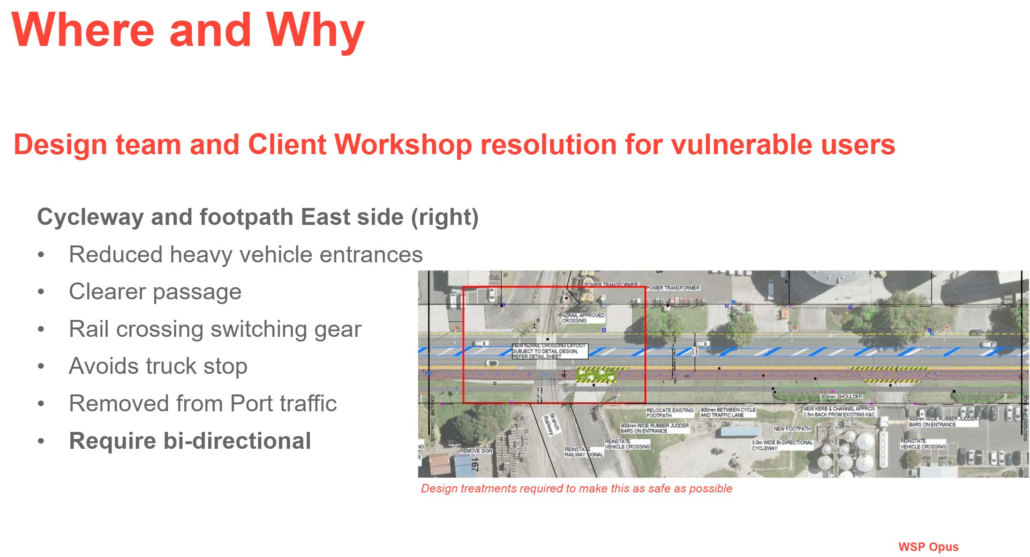
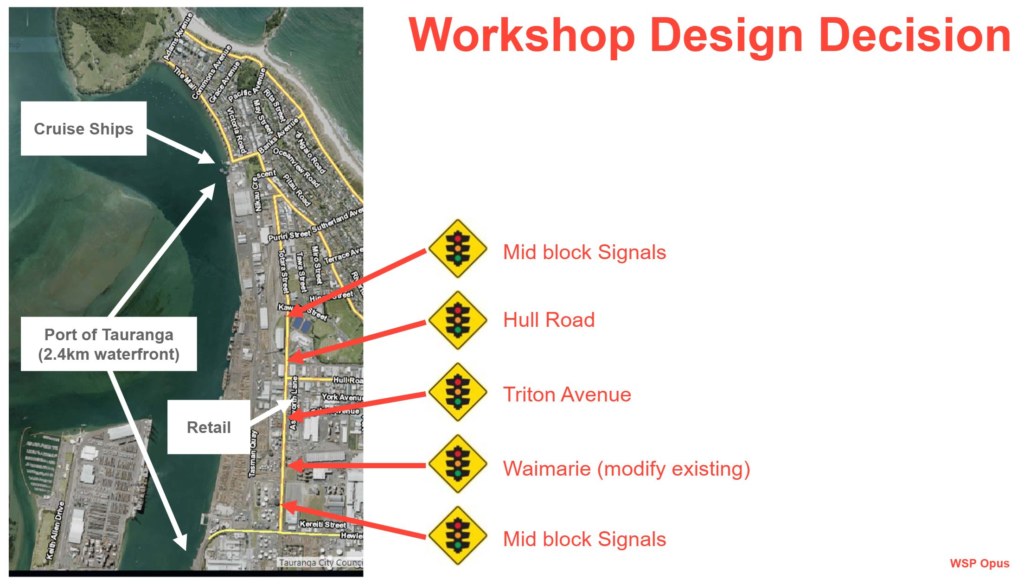
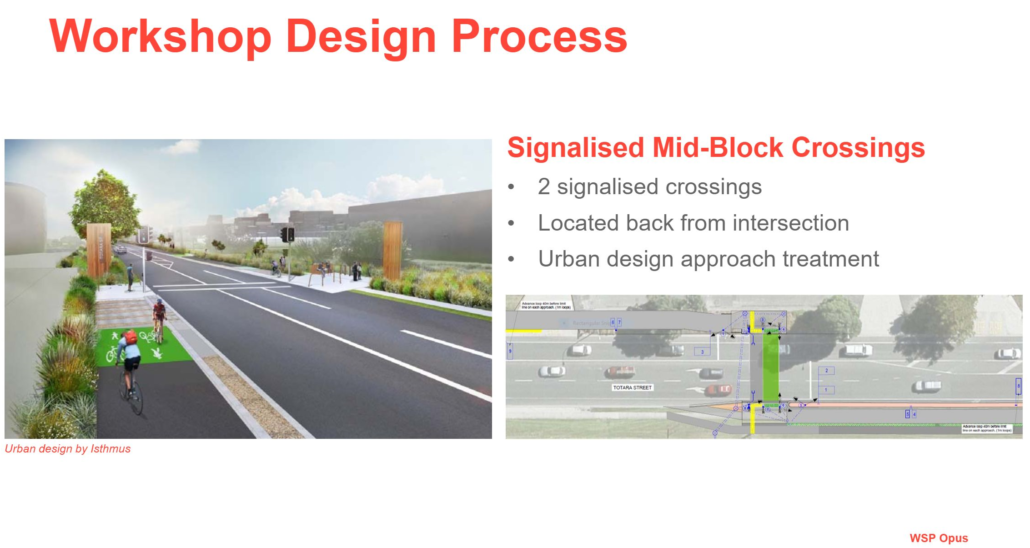
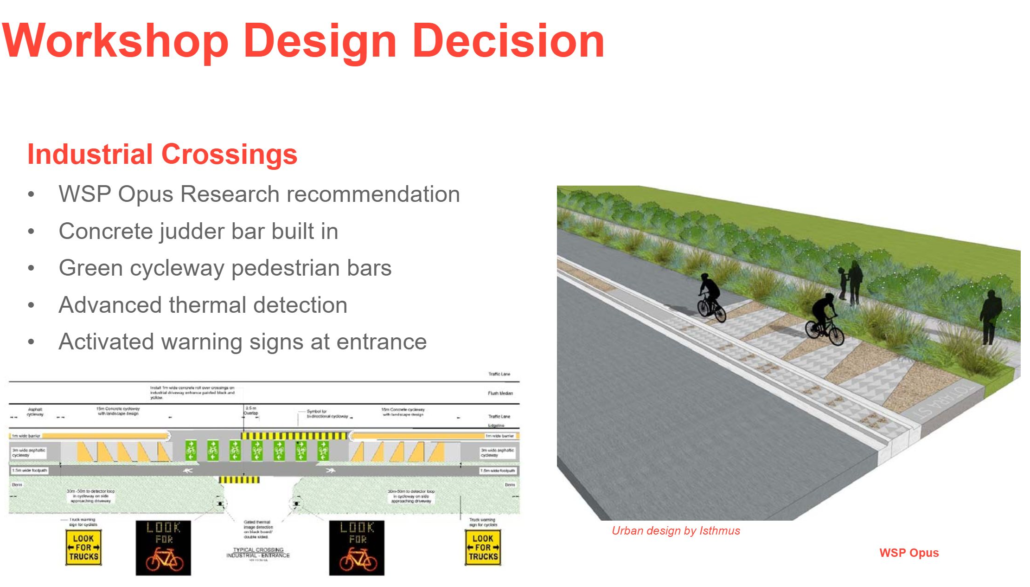
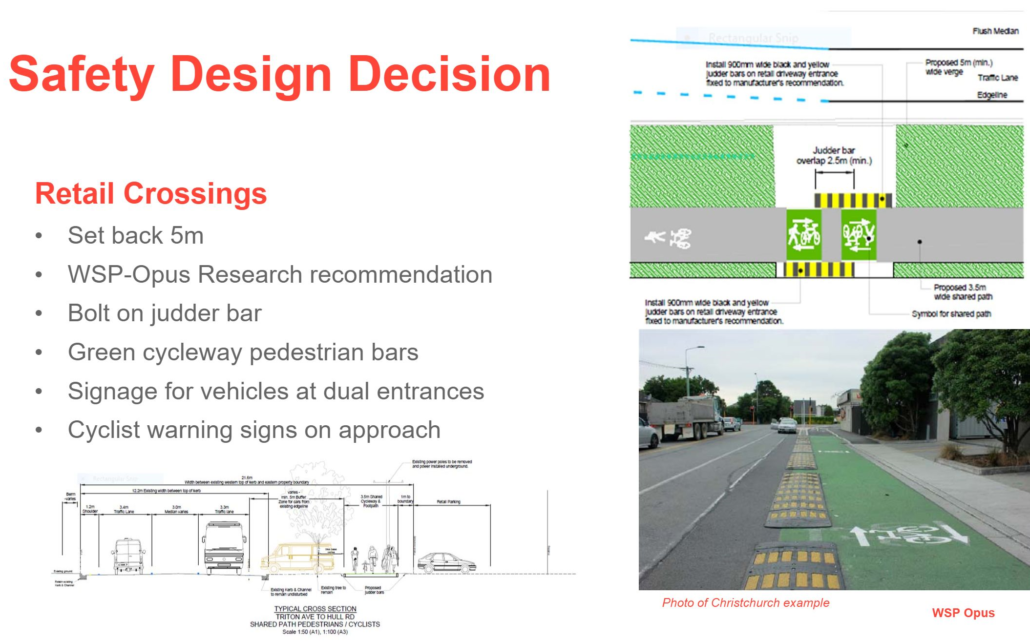
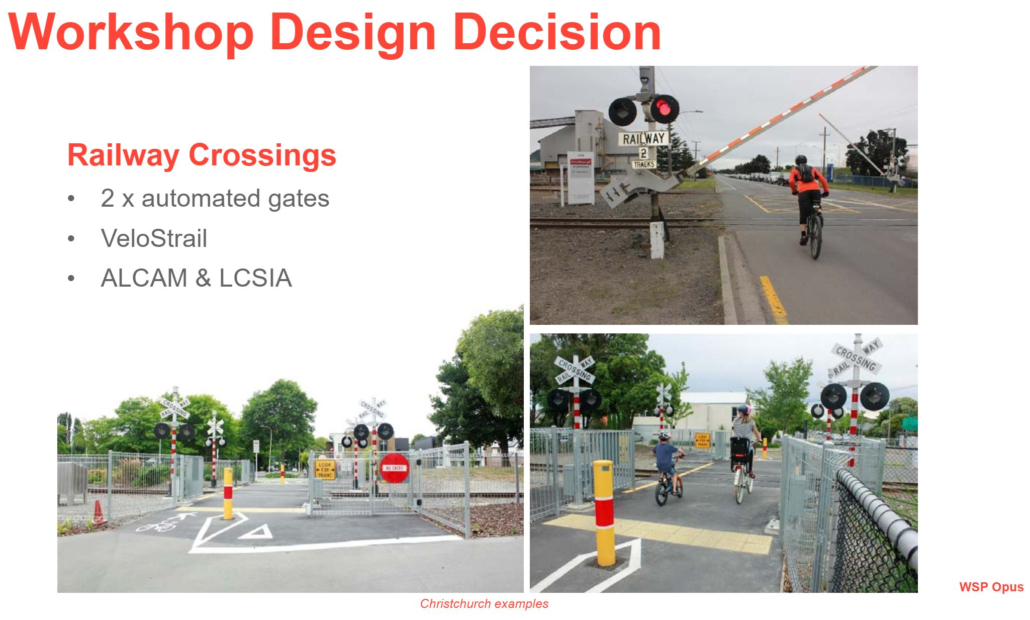
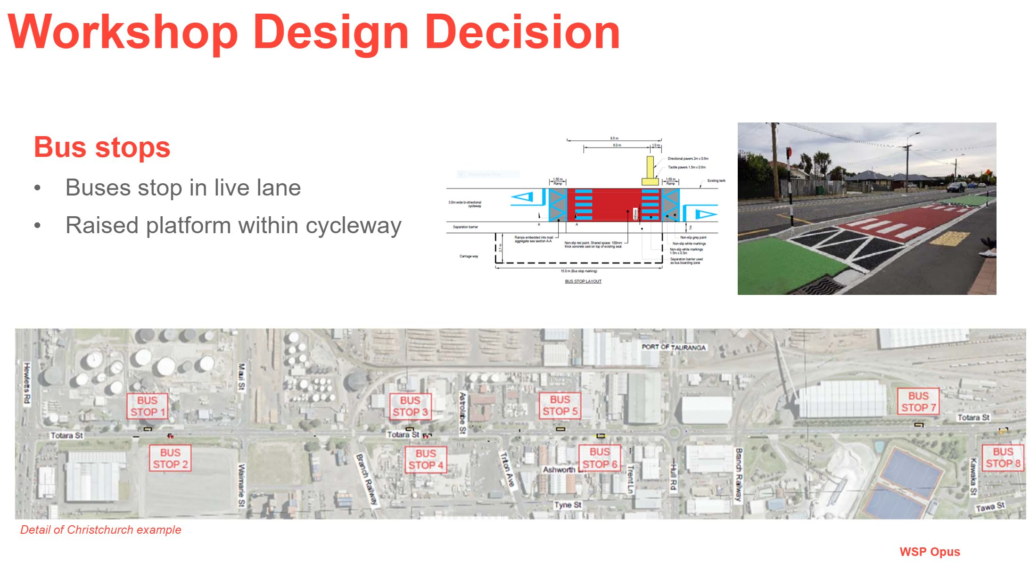
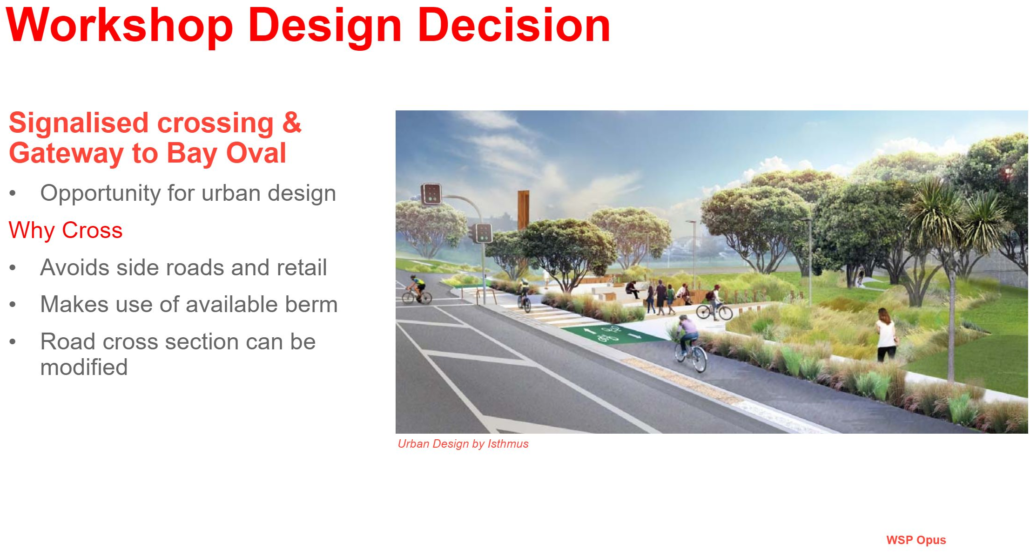
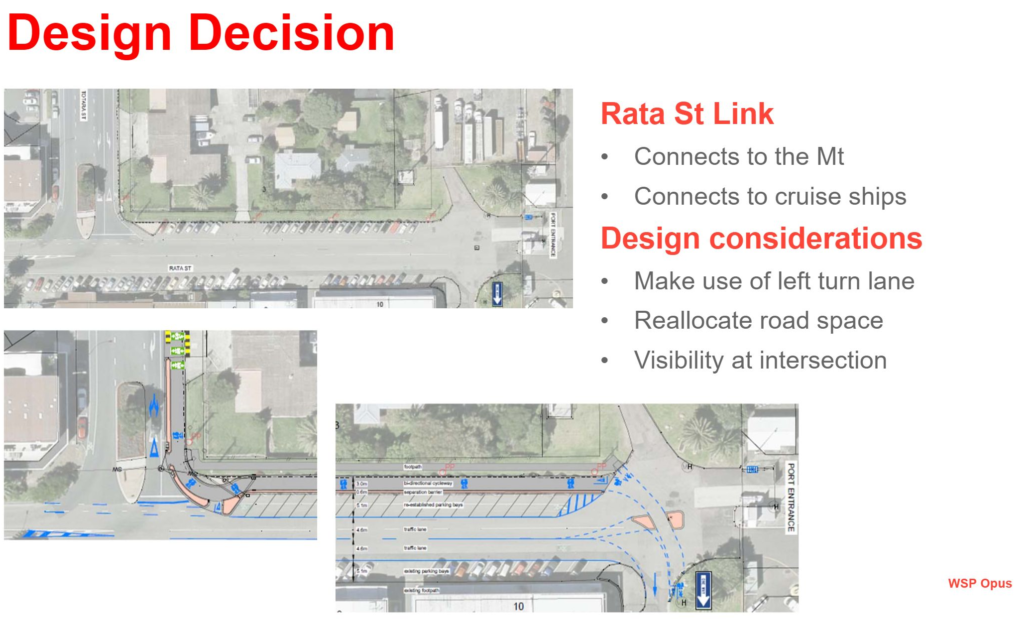
The proposed safe cycle route would start as a 3m wide shared path on the eastern side of Totara St, cross at Kawaka St and become a two-way cycleway to Rata St, with a connection to Coronation Park.
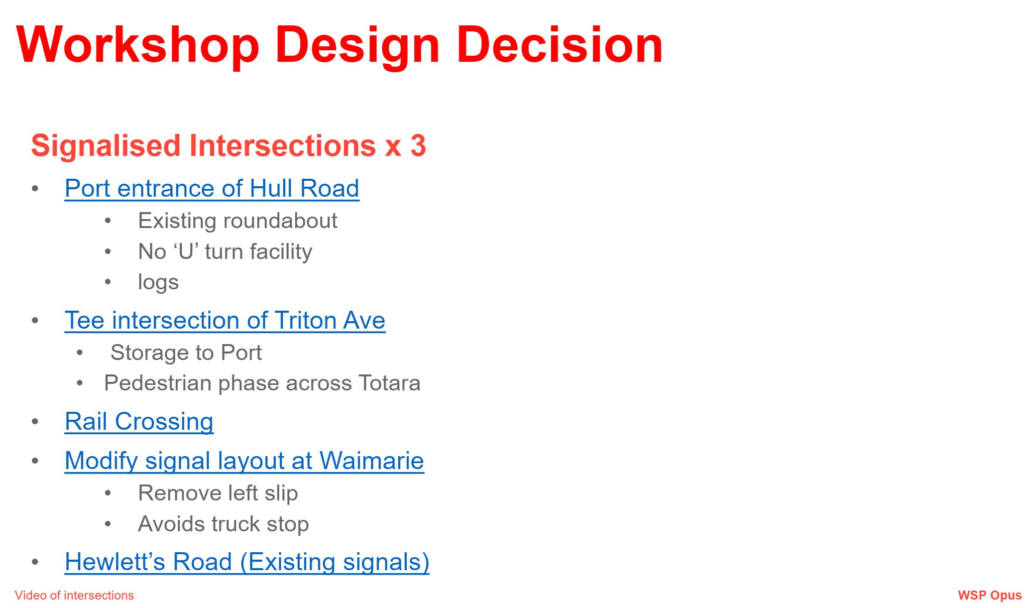
Signalised crossings would be built at Kawaka St and near Hewletts Rd.
Council staff estimated it would cost $6.9m, including associated projects, and it was expected Waka Kotahi New Zealand Transport Agency would pay 51 per cent.
The council has money in its budget for cycling infrastructure on Totara St but some of it would have to be brought forward in order to do the whole project in one hit, rather than spread over a few years.
Construction could start as soon as October or November and be done in a year if the funding was secured. The council was working with the NZTA to finalise designs and would also consult with businesses in the area.
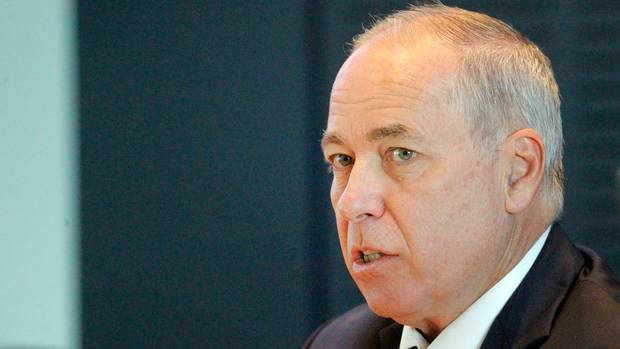
Councillor John Robson argued against bringing forward funding from future budgets and “adding to the burden of the ratepayer”. He said the council should instead make trade-offs to put “needs before wants”.
Councillor John Robson. Photo / File
He argued for scaling back the council’s $11m streetscaping project on Elizabeth St, signed off in controversial circumstances last month, and putting the excess towards fast-tracking Totara St.
The “decorating” project would, in his view, see the “creation of a Potemkin village [an external facade to make people feel good about something] that would make Rasputin proud and Catherine the Great jealous”, he said.
“We are constrained in our finances. We have to think about where we spend money. We have to prioritise.”
Mayor Tenby Powell hit back, saying he was “alarmed” to see the Elizabeth St project being, in his view, “used as a trade-off for the death of a cyclist”.
He said he believed the idea to “crib” money from Elizabeth St was “blatant filibustering” that was intended to disrupt progress in Tauranga.
Powell defended the Elizabeth St project, saying it would enhance the Farmers development and help with the revitalisation of the CBD.
Councillor Steve Morris, who also backed diverting money from Elizabeth St, said he did not think Robson mentioned the cycling tragedy.
He said Powell called the council “insolvent” last week, which spoke to the need for trade-offs.
At Morris’ request, council staff confirmed the council was not insolvent and could pay its debts. Powell declined to retract his comment, saying it came in the context of a comparison to a business, which the council was clearly not.
A bid to have council staff report back on the feasibility of taking money from Elizabeth St to give to Totara St failed.
Councillor Steve Morris. Photo / File
Councillors would weigh up funding priorities when they deliberated the draft Annual Plan 2020-21 next month.
Bike Tauranga chairman Kevin Kerr told the Bay of Plenty Times it was great to see the council had unanimously recognised something needed to be done in Totara St.
“To go the whole length of the street is the right decision to make it safe for everyone.”
There was caution in his optimism, however, given there were more steps before the project could be given the final go-ahead, including a decision on funding.
“I’ve been here before where funding has been approved then we lose it.”
Earlier in the meeting, he warned councillors against being swayed by the “bikelash” that seemed to follow any proposal to spend money on cycle lanes.
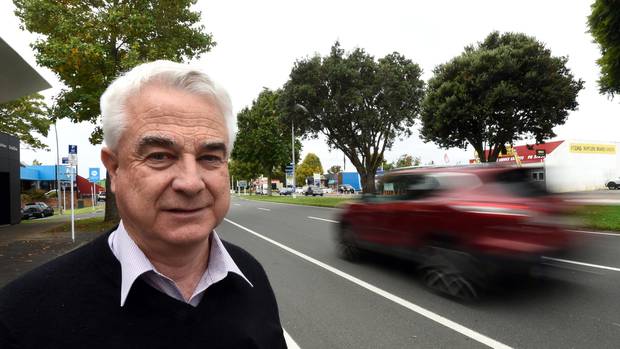
Bike Tauranga’s Kevin Kerr. Photo / File
He said the Totara St project would create the first safe cycling connection between Tauranga and its jewel, Mount Maunganui, benefitting tourists and residents and linking to other major cycleways.
Kerr said he was a former triathlete and keen recreational cyclist, but had not used Totara St in 10 years because it was too dangerous.
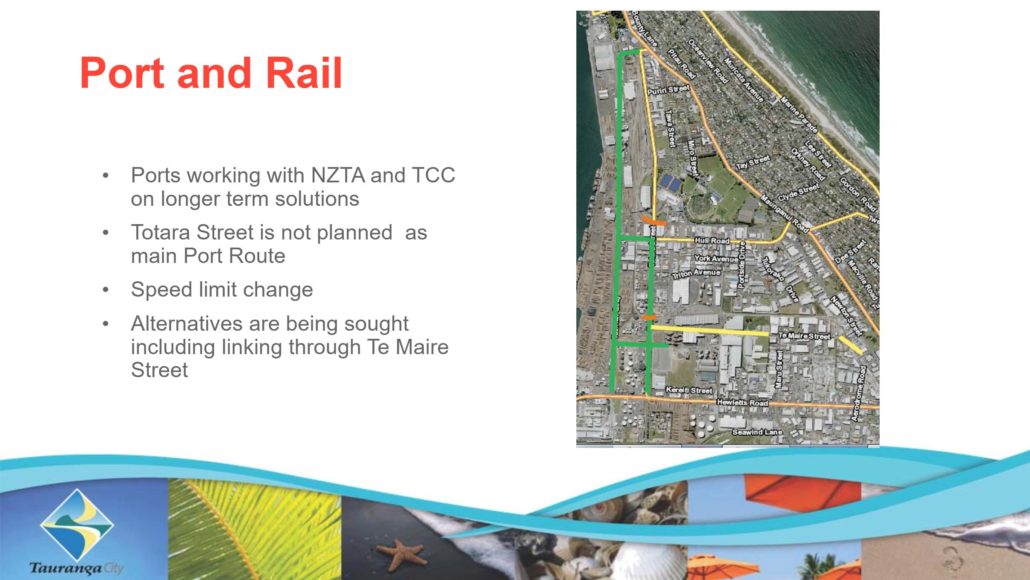
A spokeswoman for the Port of Tauranga, situated on the west side of Totara St, said the port supported measures to make Tauranga streets safer and easier to use for all road users.
“We’ve been a longtime advocate for safety improvements, increased capacity and intersection upgrades for Totara St. We want the road designated as a state highway to expedite government funding.”
The Port of Tauranga. Photo / File
Totara St businesses the Bay of Plenty Times spoke to yesterday did not want to comment on the council’s proposal without seeing the finer details of what was being planned.
Brett Hobson, general manager of Dominion Salt, said the safety record for cyclists and vehicles on the road indicated better protections were needed if it was to be a shared space.
“There needs to be safety of cyclists and drivers who use this space, and that needs to be worked on together.”
Brian Grey, owner of Decoro Fishing Supplies on Totara St, said his businesses had “been in the dark for the last two years” regarding the council’s plan for the street.
He said he would back reducing the speed limit as a place to start.
Another business owner, who did not want to be named, said a lot of his customers were cyclists, and he had also seen college students biking on the road.
“I know it’s real dodgy for bikes on that road. But that’s also not the truckies’ fault, because it’s so tight.”
He had not seen the council’s plans but said his main concern would be the prospect of losing carparks, which his customers needed.
NZTA director of regional relationships Steve Mutton said the safety of all road users was a priority and the agency was working with the council to look at options for making cycling safer on Totara St.
Cyclists allowed on footpaths
Cyclists are being asked to use the footpath on Totara St instead of the cycle lanes, which are considered too small and will be stripped of their official designation.
This was a temporary measure to keep cyclists separated from heavy traffic until the council could build a new route for cyclists the length of the street from Hewletts Rd north, as proposed.
The changes apply to the 1.5m-wide footpath between Hewletts Rd and Kawaka St, which will be classified as a shared path for pedestrians and cyclists.
The council has asked users to share the footpath with care and take extra care at entrances used by vehicles.
https://biketauranga.org.nz/wp-content/uploads/2020/07/ASNHMZEHERF3XFEN3DBONK4NIA.jpg349620networkhttps://biketauranga.org.nz/wp-content/uploads/2019/02/transperntlogo.pngnetwork2020-07-16 04:20:392020-07-16 04:20:40Tauranga City Council's debate over Totara St cycle route turns sour
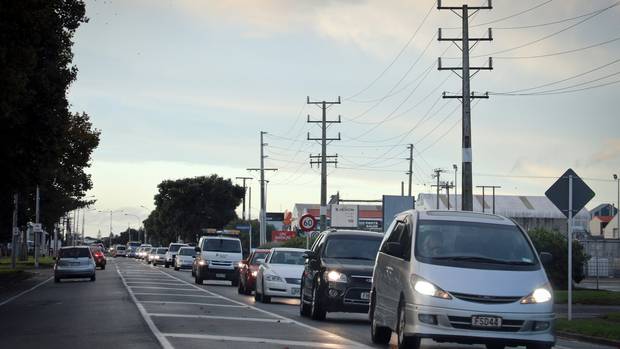
Two-lane Totara St is one of Tauranga’s busiest thoroughfares, routinely hosting a crawling queue of traffic heading between the CBD and Mount Maunganui, both inside and outside of peak hours. It has the Mount Maunganui side of the Port of Tauranga’s mammoth operations spewing trucks from one side, and customers visiting the string of small businesses on the other. Tauranga City Council has the stretch in its sights for improvements, but as with so many of the roading projects on its books, funding, as well as timing, is a problem. Now Tauranga’s biggest ratepayer has an idea to get it moving.
Tauranga’s biggest ratepayer is pushing for Totara St to be designated a state highway – and not for the first time.
Transit authorities rejected a redesignation request in 2001 but Mark Cairns, chief executive of the Port of Tauranga, says growth has changed the situation and Tauranga City Council should try again.
Cairns presented to the council on Tuesday, saying the council-owned road met three of the six criteria for a state highway designation – enough for it to be considered.
By his research, it met the thresholds for truck movements, city population and port freight.
By the Port of Tauranga’s research, Totara St meets at least three criteria for a state highway designation. Source / Port of Tauranga
“I can’t see how the New Zealand Transport Agency can not designate it a State Highway.”
The port, worth $4.2 billion, is spread across 190 hectares split between Sulphur Point and Mount Maunganui.
Cairns said that while Sulphur Point had State Highway 2 access, Mount Maunganui – on its own one of the largest ports in New Zealand – had no state highway connection.
Port of Tauranga chief executive Mark Cairns on Totara St. Photo / George Novak
Totara St desperately needed improvements for safety and to tackle congestion, potentially including four-laning, he said.
The intersection of Totara St with Hewletts Rd/State Highway 2 especially needed addressing, he said.
That intersection was highlighted in the Bay of Plenty Times Gridlock series as one of the city’s busiest with 398,552 weekly vehicle movements – up almost 50 per cent since 2013.
Totara St/Hewletts Rd is one of Tauranga’s busiest intersections according to Tauranga City Council data. Graphic / NZME
Cairns blamed population growth for the congestion, saying most of the port’s freight growth in the past five years was carried on rail and by ship.
He was confident that, as a state highway, the road would meet the cost-benefit threshold for national land transport funding.
As the local roading authority, the council needed to push for a new designation, he said.
Truck movement figures presented to Tauranga City Council. Source / Port of Tauranga
Christine Jones, the council’s general manager of strategy and growth, said Transport Minister Phil Twyford had made it clear the way to progress a new designation was through the Urban Form and Transport Initiative.
The initiative, a partnership between the agency and the Western Bay sub-regions’ three councils, aimed to produce a business case to secure long-term Government transport funding – similar to Let’s Get Wellington Moving.
The council agreed on Tuesday to refer the port’s proposal to the initiative, a path Cairns feared would cause a delay.
The council would also look into the issue as part of its own work on the Totara St/Hull Rd/Hewletts Rd corridor.
Tauranga Mayor Greg Brownless. File photo
Mayor Greg Brownless said Totara St was part of “arguably the most important roading network in the country” because it provided access to the port – the largest in New Zealand and a significant contributor to both the regional and national economies.
A 2016 economic report on the port showed it accounted for 43 per cent of the Bay of Plenty’s GDP.
Cairns told the Bay of Plenty Times the port paid $1.6m in rates and $32m in corporate tax a year and expected some of those taxes would go on roads.
The NZ Transport Agency was contacted for this story but was not able to provide comment in time for the deadline.
Owners of other businesses on Totara St told the Bay of Plenty Times congestion on the street was an issue, though it impacted some more than others.
Some were worried four-laning might mean they would lose parking spaces, with that also being a concern with the council’s plan for a cycle lane on Totara St.
Barry Morris, owner of Lion Motors, said Totara St was “definitely a busy road” but that had its benefits.
“We’re a car yard so it’s good for us when people go slow because they get a good chance to look at the cars on the lot.”
https://biketauranga.org.nz/wp-content/uploads/2020/07/E2Y27WS6UJEPJEM3QYFBP6PEBA.jpg349620networkhttps://biketauranga.org.nz/wp-content/uploads/2019/02/transperntlogo.pngnetwork2020-07-16 03:40:572020-07-16 03:40:59Port of Tauranga pushes for Totara St to be made a state highway
https://biketauranga.org.nz/wp-content/uploads/2019/02/transperntlogo.png00networkhttps://biketauranga.org.nz/wp-content/uploads/2019/02/transperntlogo.pngnetwork2020-07-11 11:24:142020-08-04 22:52:35The solution blocked by Port of Tauranga
Tauranga City Council has admitted a cycle lane on Totara St is unsafe but its advice to cyclists, for now, is to be seen.
Acting transportation manager Phil Consedine said ideally the cycle lane on Totara St would have an absolute minimum width of between 1.5 and 1.8 metres.
The New Zealand Transport Agency states on its website the width of cycle lanes can vary but the absolute minimum width should be 1.4m wide.
“And should only be used in low-speed environments, and only along very short sections of the road, say less than 100 metres,” the website states.
It is understood the cycle lane is less than 1.5m wide.
Consedine said the minimum width was “obviously not possible” on the existing road due to the current width restrictions.
“We acknowledge the challenges for people biking with limited roads available to provide alternative access from Mauao to the CBD.”
However, he said before the council could start any work on new or upgraded cycleways in the area, it was important he ensured the right outcome for all users of Totara St.
“In the meantime, we advise people on bikes to make sure they are seen, for example, by wearing hi-vis clothing and by using lights.”
In the area, where a large number of heavy vehicles exist, Consedine believed an additional buffer between heavy vehicles and people on bikes would be far more important.
“It is also important to note it is not only the width that requires consideration, heavy vehicles turning left have limited visibility of people biking and hence any design of a new road layout requires this to be taken into consideration.”
He said Totara St required a solution which considers the wider transport network in managing freight and heavy vehicle operations, car travel, bike travel and railway operations.
However, none of those could be considered in isolation.
“It is also vital that impacts on local businesses, commercial operations and safety are considered hand in hand with any proposals.
“The Urban Form and Transport Initiative will consider Totara St as part of the wider transport network and growth to ensure an optimum solution is delivered.”
https://biketauranga.org.nz/wp-content/uploads/2019/06/R6JL7RCX7FBR5GF22PTNQNK7N41.jpg349620networkhttps://biketauranga.org.nz/wp-content/uploads/2019/02/transperntlogo.pngnetwork2019-06-19 08:11:062019-06-19 08:27:10Tauranga City Council admits width of Totara St cycle lane unsafe
Cyclists are concerned about the width of the cycle lane on a key commuter’s route between Mount Maunganui and Tauranga.
Bike Tauranga affiliate Shane Plummer says the Totara Street cycle lane is a ‘tragedy waiting to happen’. He points out that the width of the current cycle lane does not meet New Zealand Transport Agency best practice guidelines.
The Totara St cycle lane varies from 1.2m to 1.5m in width, and the road speed limit is 60 km/h.
NZTA best practice guidelines state that the desirable minimum width for a cycle lane next to kerb edge varies between 1.6m and 2.5m.
NZTA states that the desirable minimum width for a cycle lane next to kerb edge on a road with a 60km/hour speed limit is 1.75m.
Tauranga City Council acting manager of transportation Phil Consedine says current cycle lane width is less than desirable for an on-road cycle lane and does not offer people on bikes adequate protection from traffic.
“Overall, Totara St is not considered ‘fit for purpose’ or adequately safe for people on bikes which presents a risk of this road, seeing it currently is being used as a route for people on bikes.
“Ideally, the cycle lane on Totara St would be between 1.5 and 1.8 metres wide. Obviously, that is not possible on the existing road due to the current width restrictions.”
ViaStrada senior transportation engineer and transportation planner Glen Koorey says the existing cycle lane width is not sufficient due to the heavy vehicle traffic and high speed limit of Totara St.
“1.2m that’s really at the minimum for a cycle lane, and you might get away with it on a quiet 50 km/h road. It’s not going to work on Totara St.”
ViaStrada senior transportation engineer and transportation planner Axel Wilke, who reviewed the Totara St project on behalf of Tauranga City Council, also raises the issue of turning traffic being the biggest danger to people cycling.
“Those truck drivers they can’t see a thing when they turn left into a driveway and that is the real danger for cyclists along Totara St.”
Glen and Axel both agree that the council’s proposed shared path along the east side of Totara St would resolve issues around the current road layout.
Tauranga City Council has halted the Totara Street Improvement project, which proposed the shared path for cyclists, while Urban Form and Transport Initiative considers the street as part of the wider transport network.
“People will use the existing cycle lane because they think it’s the only choice they have, and it’s certainly not fit for purpose.
“When you build a decent shared path you provide good width, good sight lines and you can deal with what happens at the intersections,” says Glen.
Mount Maunganui resident Marion Vialle cycles down Totara St on her daily commute (note, she has a flashing light on the back of her bike).
Hundreds of cyclists are putting their lives on the line to get from Mount Maunganui to Tauranga each week.
These cyclists will now have to wait longer for a safe access route after the Tauranga City Council postponed a key project to consider how to manage wider transport plans on Totara St.
Cyclist Nick Roozenburg describes Totara St as an ‘absolute deathtrap for the inexperienced.’
“That road is just too dangerous for people to try cycling. If you are one of those people who would like to give commuter cycling a go, Totara St would just put you off forever.”
Tauranga City Council strategy and growth manager Christine Jones says it’s important to pause the project, while Urban Form and Transport Initiative considers Totara St as part of the wider transport network.
She says UFTI will develop a plan based around the way Tauranga will grow. It will cover short-term urgent fixes as well as multi-decade planning.
“Totara St requires a solution that considers the wider transport network in managing freight and heavy vehicle operations, car travel, bike travel and railway operations.”
Totara Street is a nationally strategic corridor that plays a key role in serving port traffic, Christine says.
“Growth will continue to add additional pressure on this corridor with the Port of Tauranga expanding its capacity and maximising productivity.”
Bike Tauranga chairman Kevin Kerr says the cycleway has been put aside because Port of Tauranga and Kiwi Rail think that more consultation needs to happen on how Totara St is going to look for the next 20 to 30 years. He understands that and agrees that more consultation is required.
“Bike Tauranga and Greater Tauranga need to be around the table with Council, Port of Tauranga and Kiwi Rail understanding what their needs are, but they also need to understand what the needs of the community are,” he says.
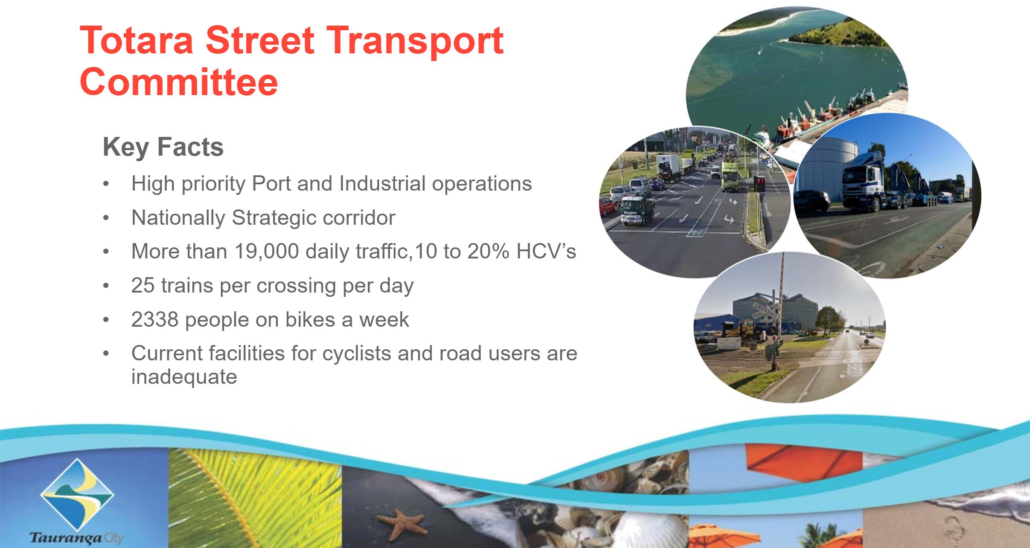
Totara St is identified as a primary cycling route connecting Mt Maunganui and the CBD. The route is used by an average of 1427 commuting and recreational cyclists per week.
About 64 per cent of cyclists accessing Tauranga Harbour Bridge to and from Tauranga City Centre use Totara Street.
Bike Tauranga affiliate Shane Plummer is concerned about the size of the existing cycleway on Totara St.
“There’s no way for bicycle commuters to get to Mt Maunganui without having to use a dodgy bike lane that’s seriously dangerous. Vehicles are passing cyclists on very limited space,”
“The cycleway desperately needs to be improved for cycling because it’s a key route for cycling between Tauranga and Mount Maunganui.”
Mount Maunganui resident Marion Vialle cycles on Totara St every weekday.
“On the bridge, it is quite safe because there is separation, but on Totara St, I do not feel safe at all.”
Sustainable Business Network BOP regional manager Glen Crowther says they support the council’s approach and will push for a safe cycleway option to be implemented as soon as possible.
https://biketauranga.org.nz/wp-content/uploads/2019/06/190531-Totara-St-EH1.jpg457685networkhttps://biketauranga.org.nz/wp-content/uploads/2019/02/transperntlogo.pngnetwork2019-05-31 08:06:592019-06-19 08:11:00Halted projects means greater risk for cyclists


/media.nzherald.co.nz/webcontent/infographics/4226/CYCLE_online.jpg)
/cloudfront-ap-southeast-2.images.arcpublishing.com/nzme/EMDRWCDZ3FCBHB2HXRYQW6QHSM.jpg)
/cloudfront-ap-southeast-2.images.arcpublishing.com/nzme/V56ELUMCOFHRDE525642F7VA4A.jpg)
/cloudfront-ap-southeast-2.images.arcpublishing.com/nzme/UMIS5KH3XRCTHJNOHFQ4HU3MXQ.jpg)
/cloudfront-ap-southeast-2.images.arcpublishing.com/nzme/MWKU4CORN5CAFMJSI6IGIZYNZU.jpg)
/arc-anglerfish-syd-prod-nzme.s3.amazonaws.com/public/LROTUCOOBNDRDOLCSMX3NPTYAQ.jpg)
/arc-anglerfish-syd-prod-nzme.s3.amazonaws.com/public/XMKFH3NQRNGFBEMYHSMVYRIMEI.jpg)
/arc-anglerfish-syd-prod-nzme.s3.amazonaws.com/public/FDNZFLDWWRF43BJ4ZSGY4GOZHU.jpg)
/arc-anglerfish-syd-prod-nzme.s3.amazonaws.com/public/G5JW7G6A55FQTBUVFOUNZIBYMM.jpg)
/arc-anglerfish-syd-prod-nzme.s3.amazonaws.com/public/E2Y27WS6UJEPJEM3QYFBP6PEBA.jpg)